New — find us at the Christchurch Farmers' Market, Riccarton House, every Saturday 9am–12pm See all dates →
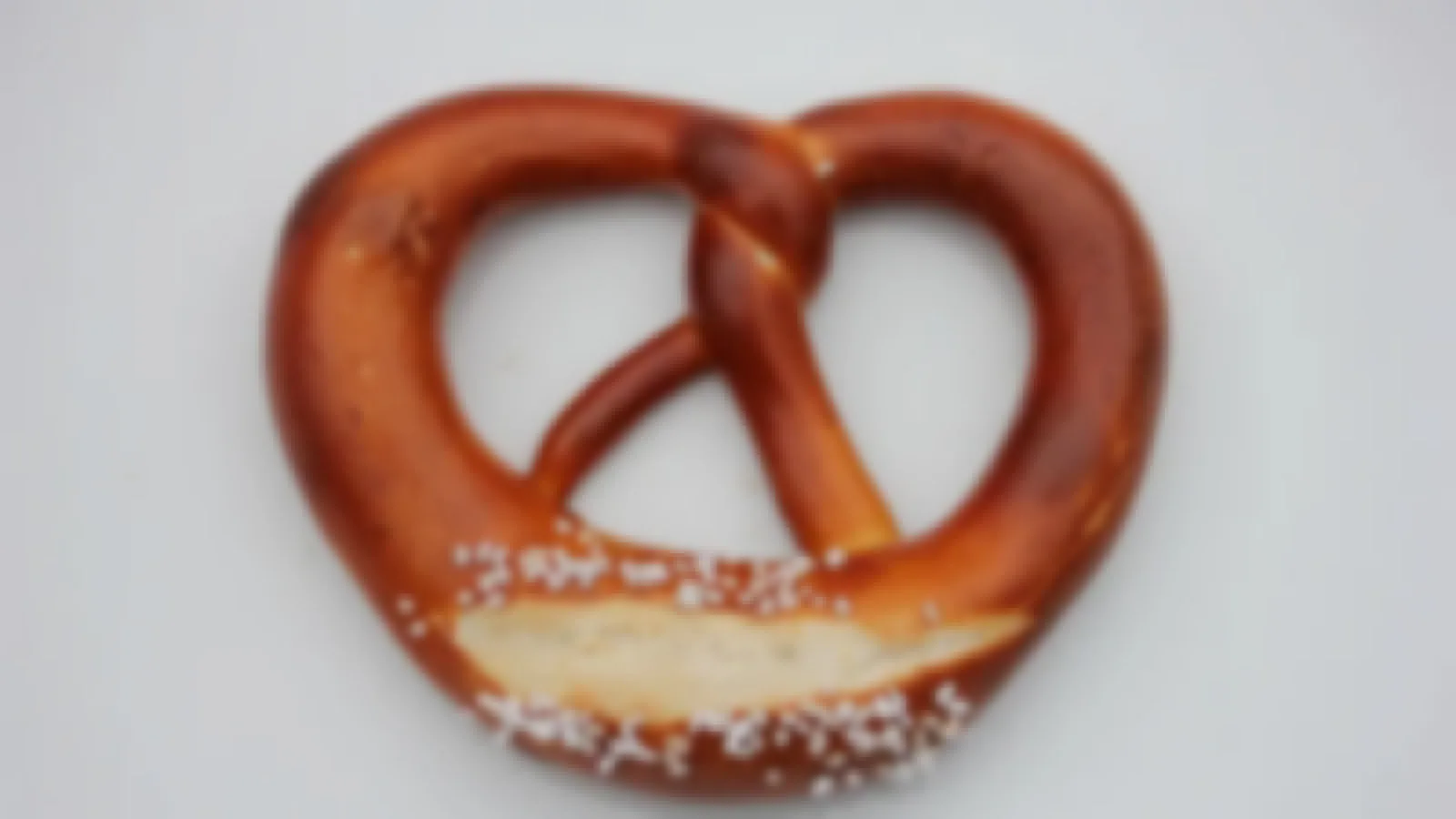
A hand-rolled Laugenbrezel with its dark glossy lye crust and coarse salt
How it is actually made

What Is a
Laugenbrezel?

Lauge is German for lye. A Laugenbrezel is a pretzel dipped in a food-grade lye solution before it goes in the oven — and that one step is the entire difference between a real German Brezel and a bread knot wearing the same shape.

What the lye bath actually does

Three things happen in a few seconds of dipping, and none of them can be faked afterwards.

The colour

Lye is strongly alkaline, and alkaline dough browns far faster in the oven. That is where the deep mahogany gloss comes from — not from egg wash, not from long baking, and not from anything you can brush on at the end.

The flavour

The same reaction creates the savoury, faintly mineral tang that people recognise instantly and struggle to describe. Take the lye away and the flavour goes with it, however good the dough was.

The skin

It sets a thin, taut skin on the surface. That is what gives you the snap on the outside against a soft, properly chewy crumb underneath — the texture contrast that makes a Brezel worth eating fresh.

And then it is gone

The oven converts the lye during baking, so none remains in what you eat. It is a traditional bakery technique, hundreds of years old — all the care sits in the handling beforehand.

How ours are made

1. Rolled by hand

Every Brezel is rolled and knotted by hand — thick belly, thin arms. No press, no mould, which is why no two are identical.

2. Dipped and salted

Into the lye, then coarse salt across the belly. This is the step most places skip, and the one everything else depends on.

3. Baked and straight out

Baked the morning they go out, then delivered or taken to market the same day. Nothing frozen, nothing baked the night before.

Wondering about the spelling? Brezel, Bretzel or pretzel? →

Laugenbrezel questions

Lye, safety, the baking-soda shortcut, and how to keep them.

What is a Laugenbrezel?

A German soft pretzel made by dipping the shaped dough in a food-grade lye solution before baking. Lauge is German for lye, so the name literally means lye pretzel. The bath is what produces the dark glossy crust, the distinctive flavour and the contrast between a thin snappy skin and a soft chewy inside.

Is lye safe to eat?

Yes. The dip is a dilute solution, and the heat of the oven converts it during baking, so no lye remains in the finished Brezel. It is a traditional technique used in German bakeries for centuries — the care is all in the handling before baking, not in the eating.

Can you use baking soda instead?

You can, and many cafes do because it avoids handling lye. It gives you a browner, softer bread roll in a pretzel shape. What it does not give you is the glossy mahogany crust or the particular savoury tang, which is exactly the thing people who grew up with Brezels are looking for.

Why is the middle thin and the bottom thick?

That is the shape working as designed. The thin crossed arms bake crisp while the thick belly stays soft, so a single Brezel gives you two textures. It is also why the arms are traditionally split, not just decorative.

How should I eat and store them?

Fresh, on the day, ideally still slightly warm — plain, with butter, or split. They are bread, not a packaged snack, so they are at their best within hours. If you must keep them, freeze them the same day and warm them briefly in the oven.

Are they vegan?

Every Brezel we make is vegetarian, and we make vegan versions of the Original Brezel, the Sweet Brezel and the Biscoff® stick.

Reading about it only gets you so far

Hand-rolled, lye-dipped, baked fresh in Rangiora. Delivered across the Waimakariri, collected on Fridays, or bought at one of our Saturday markets.

Browse the shop